Slow Fashion: Ethically Made Hats and The Women Who Make Them in Rahayu
Tipa has been part of the artisan team that makes our hats since 2020. Ayu joined in 2022. Both work at Esduabelas, the workshop in Desa Rahayu, Bandung that has produced our hats since 2015.
Why the team is mostly women
Rian leads the team at Esduabelas. When demand grew this year and he needed to add more people, his approach was consistent with how he has been hiring for years.
"Women are more thorough and careful," he told us during our visit in July 2026. "When you are making a hat, every detail matters. The stitching, the finish, the brim alignment. That level of attention makes a real difference in the final product."
Thoroughness in hat assembly is not a soft preference. The stitching tension on a brim determines how long the hat lasts. Alignment on a six-panel crown is visible if it drifts by a few millimeters. The artisans doing this work have to care about every detail.
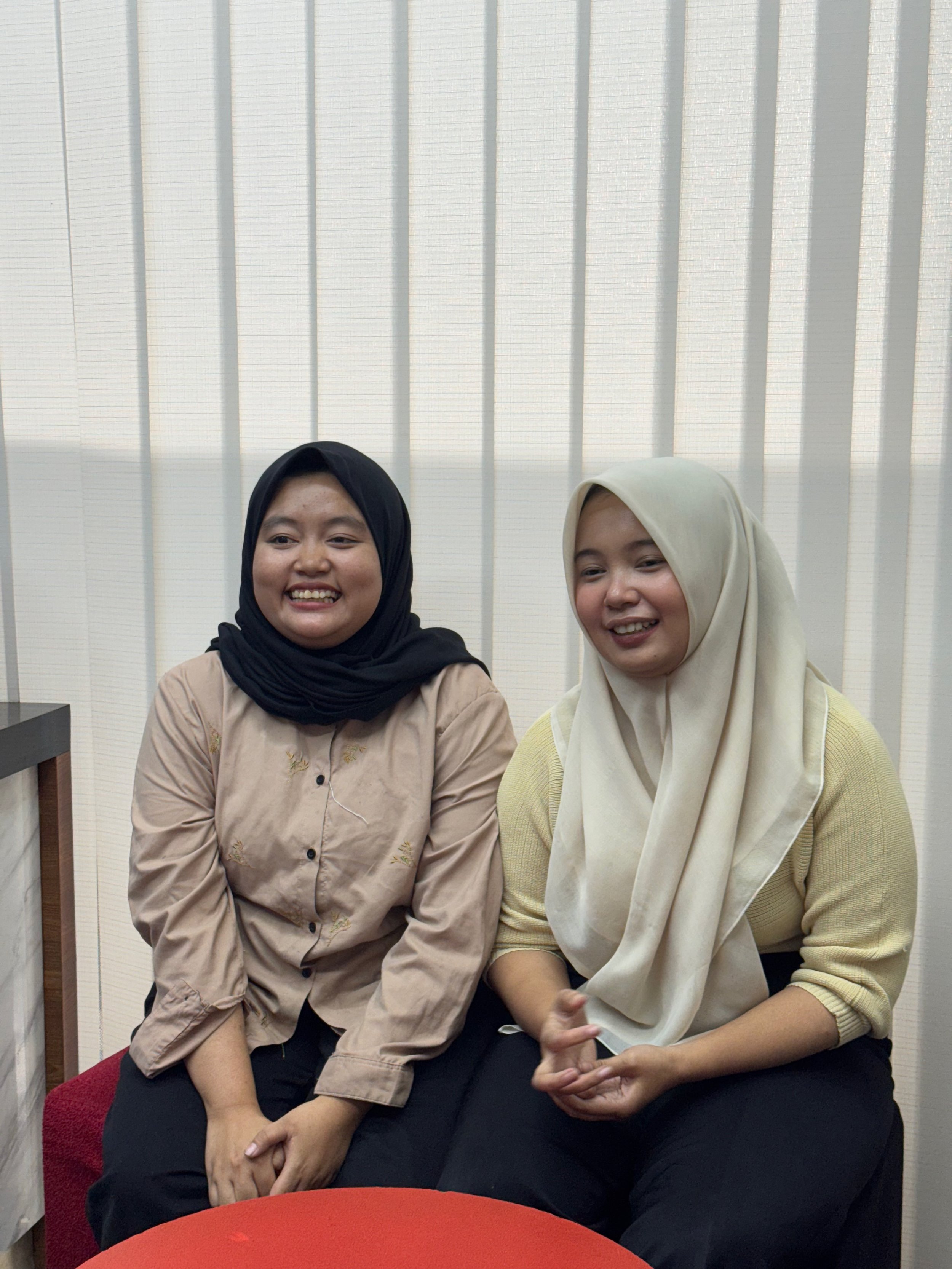
Tipa (right) and Ayu (left), our artisans in Cigondewah
Tipa’s account
Tipa has worked at Esduabelas for five years. Her husband works there too. Both live nearby. She described what it is like to work under the terms our supplier operates on.
"We like how it’s comfortable here and people here are very supportive. We got fair pay and yet Topiku never pushed us to do the work quickly. They appreciate the timeline and time more, and know the importance of time for a good quality hat."
We pay our supplier above the regional standard and settle every invoice before the end of the month. Tipa’s description of how those payment terms translate into the workshop is the most direct account we have of what they look like from the production floor.
For Tipa, the workshop is also where she and her husband can both earn. That kind of arrangement matters in a region where production work is often seasonal or insecure.
Ayu’s account
Ayu joined Esduabelas in 2022. Her description of the working environment named something Tipa had implied but not said directly.
"Being around other women in the workplace makes it more comfortable. It changes how the whole day feels."
A team where women are the majority is one where a woman’s experience is the norm rather than the exception. That is the environment Rian built, and the artisan team reflects it. The people doing the work want to come back the next day.
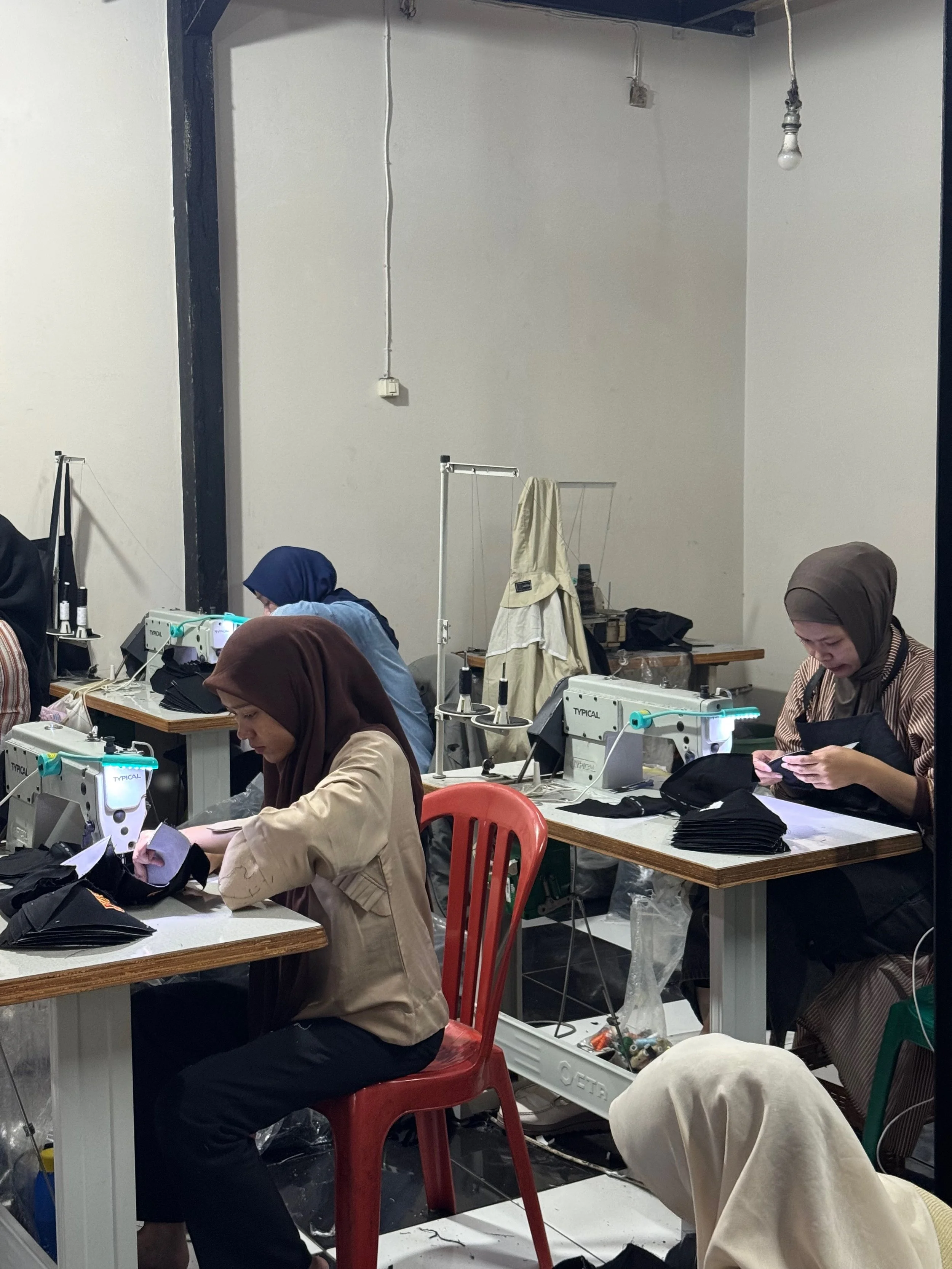
Esduabelas, our workshop in Desa Rahayu
How the workshop shows up in the hat
The connection between how a team is treated and what they produce is real, and it shows up in the product. A hat that passes every quality check is one where the person who made it had time to care about it.
We are not the hero of this story. Rian and the team at Esduabelas are. We describe our role accurately: we pay our supplier above the regional standard, settle invoices upfront, and we do not push for speed at the cost of quality. That is what we call slow fashion. What the team does with those terms is what you hold in your hands.
Source: interviews with Tipa, Ayu, and Rian at Esduabelas, Desa Rahayu, Bandung, July 2026. Quotes are their own words.