How Topiku Found Its Home in Cigondewah
Before there were hats, there was a rainy afternoon, a wrong turn, and a stranger who offered shelter.
When Monty, Topiku's founder, first set out to find a production partner, he did what most founders do: made a list, visited workshops, and asked questions. He traveled to Cigondewah, a village on the edge of Bandung that has been the quiet heartbeat of Indonesia's textile industry for generations along with several other places, looking for the right fit. Not just a factory. A team he could actually build something with.
Cigondewah is not a place that announces itself. There are no signs pointing you toward the right workshop. The lanes between buildings are narrow, and the sound of machines is everywhere. For someone new to the area, it is easy to feel like you are moving in circles.
That is exactly where Monty was when the rain came.
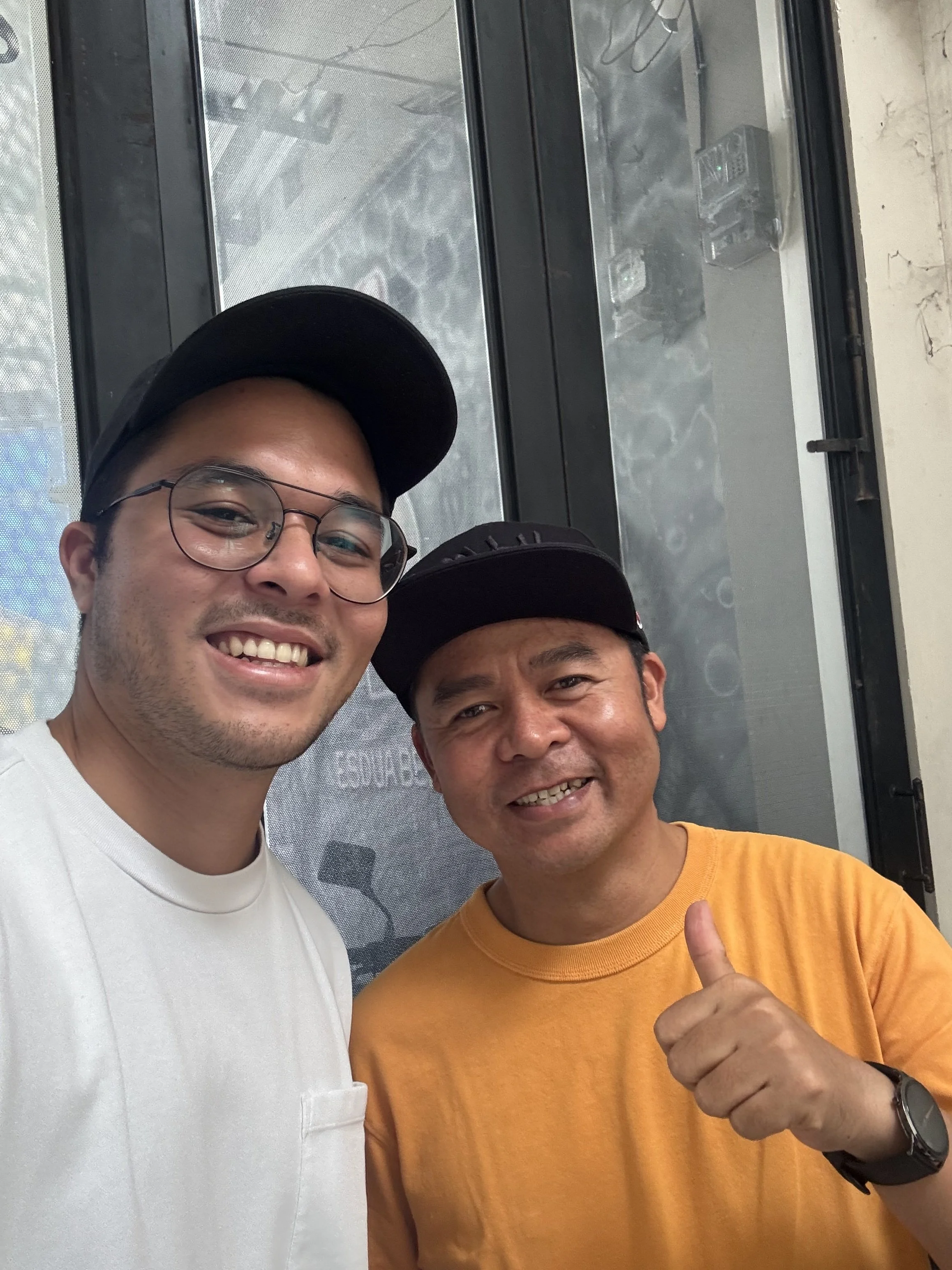
Monty and Kang Asep
It came the way rain comes in Bandung, sudden, heavy, and without much warning. Monty ducked into the nearest doorway he could find, which happened to belong to a hat workshop. Inside was Kang Asep, one of the owners, who did not ask why this stranger had appeared at his door. He simply offered him somewhere to sit and wait it out.
They started talking.
That conversation, started by chance and sheltered by rain, became the foundation of everything Topiku makes today. Kang Asep's team had the skill, the craftsmanship, and the patience to work through problems that most mass manufacturers would simply route around. Monty had the vision and the values. Neither had been looking for the other that day. But the fit was obvious almost immediately.
More than a decade later, that relationship is still at the center of how Topiku works.
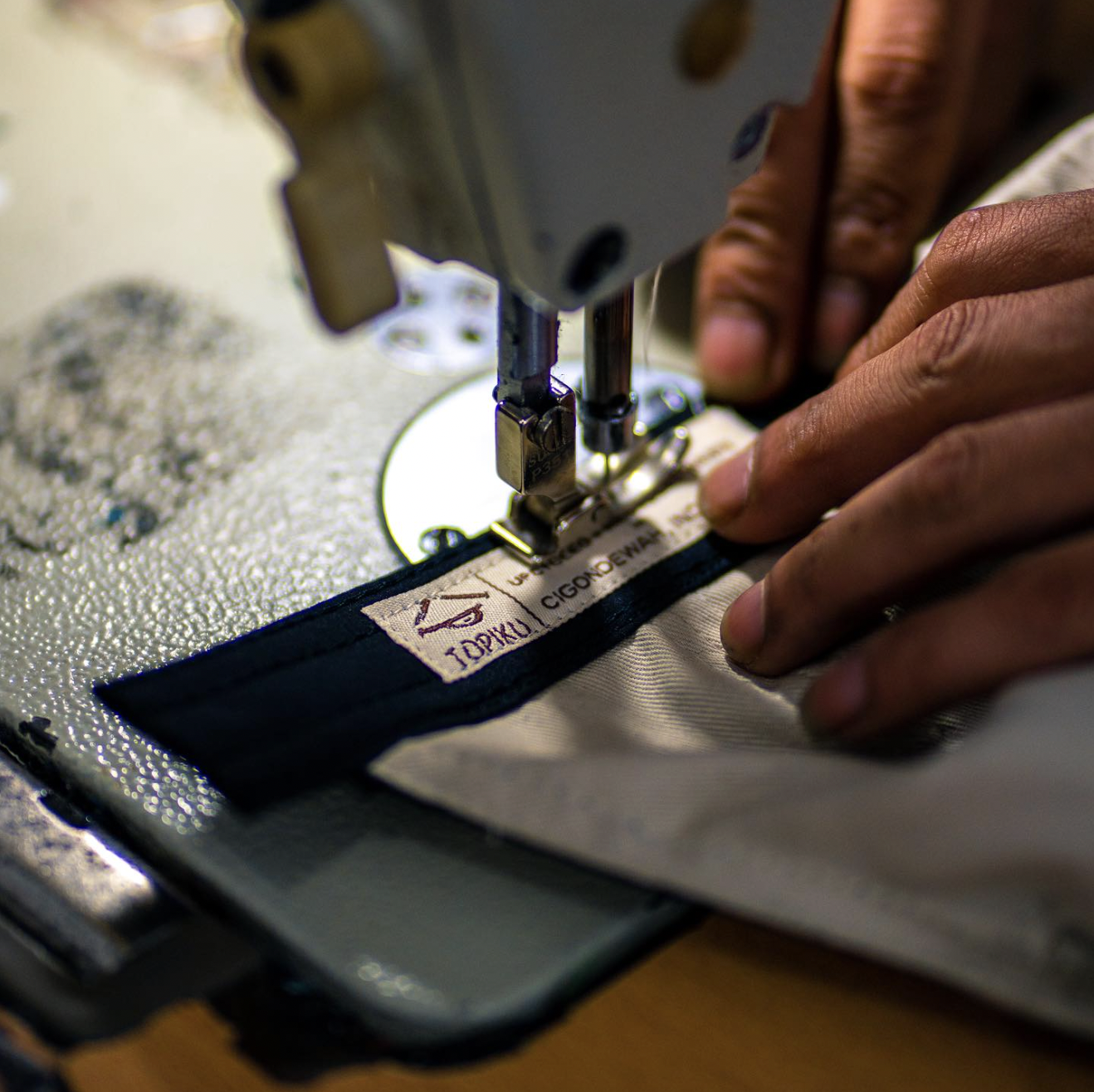
We think about this often, how differently things might have gone if the rain had held off another hour, or if Monty had found a different doorway. The hat you receive from Topiku exists in part because of a storm and a stranger who made room.
Cigondewah is not just a production location for us. It is where the people who know how to make a hat properly from the cutting of upcycled cotton twill to the hand-finishing of each brim. Many of the artisans in our workshop have been there for years. Some have taught the craft to their children. The knowledge is local, specific, and not something you can replicate by switching to a cheaper supplier two time zones away.
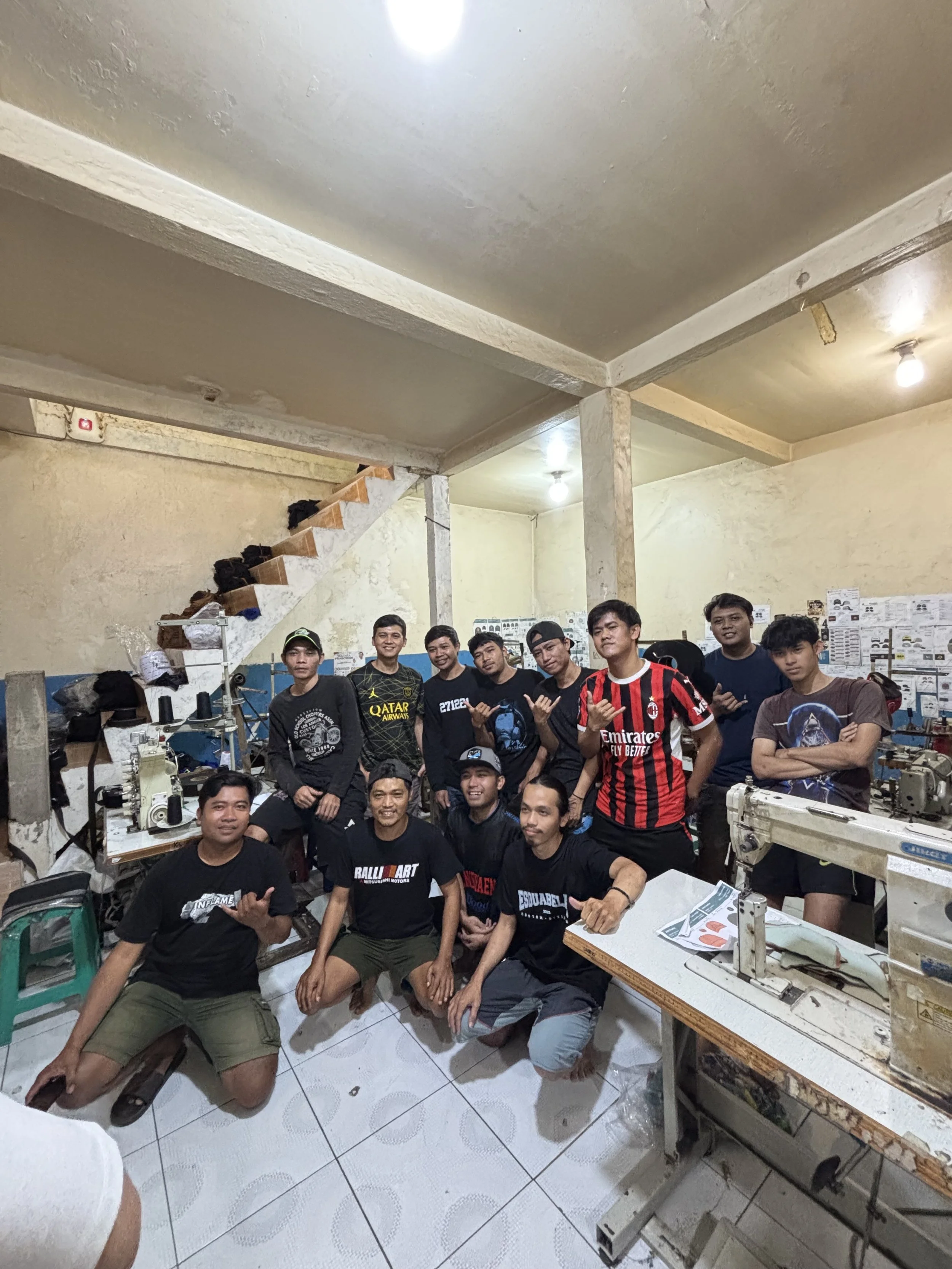
Topiku team at Cigondewah
This is what traceability actually looks like in practice. It is not a spreadsheet or a certification alone. It is knowing the name of the person who made your hat, knowing the name of the person who taught them, and knowing that when something is not right, there is a real relationship and a real conversation to fall back on.
We do not work with Kang Asep's team because it is the most convenient option. We work with them because convenience was never the point. The point was to make something worth keeping, with people worth standing behind.
That has not changed since a rainy afternoon in Cigondewah. And it will not.