Making the LYFER Hat: Inside the Collaboration and How It Comes Together
LYFER is a Melbourne-based brand built around birding as a lifestyle. They design apparel and accessories for people who watch birds and spend time outdoors. Between 5-10% of each LYFER purchase goes toward bird conservation. When they were developing their headwear collection, they were not looking for the closest or cheapest manufacturer. They were looking for one whose approach matched how they wanted their products to exist in the world.
The LYFER team described it in a June 2026 Avian Journal post: they wanted a maker whose work was "considered, useful, well-made, and connected to something bigger than the product itself." Our B Corp certification, use of upcycled and recycled materials, and our supplier relationship in Desa Rahayu since 2015 were the factors that made the fit clear.
The full account of how the collaboration came together, including an interview with Monty, is on LYFER's own Avian Journal, published 25 June 2026. This post covers the production side.
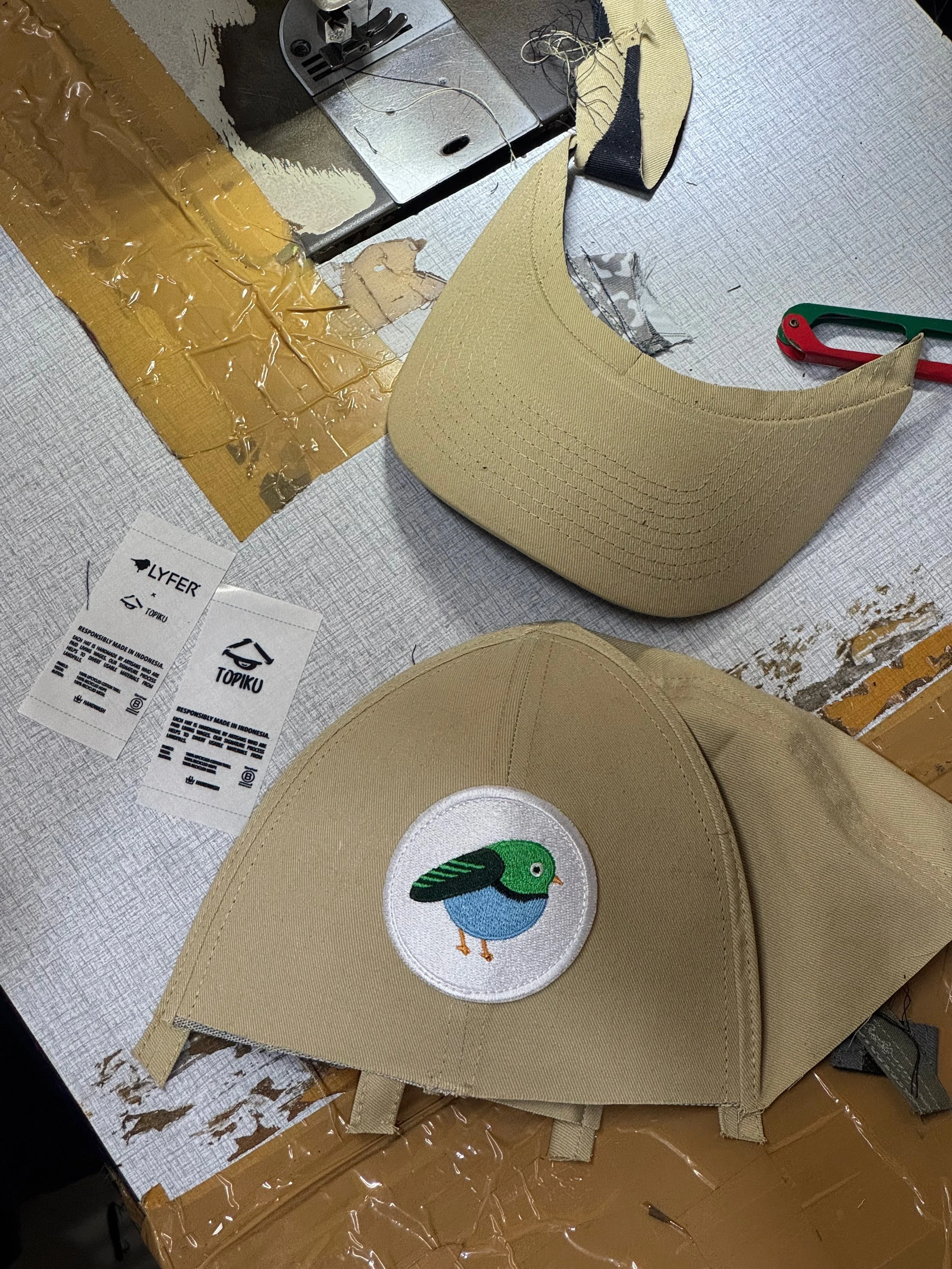
LYFER Hats in production at Desa Rahayu
Birding as a new reference point
Working with LYFER introduced the Topiku team to birding for the first time. Monty described it to LYFER's team this way: "It's one of the few activities that forces you to slow down, pay attention, and just be present with nature. In an industry that moves fast, that was a good reminder for us."
Monty chose the White-headed Munia as his bird for LYFER's In the Making series: a small chestnut-brown finch native to Southeast Asia. A pair nested in the front yard of his home in Bali shortly after he and his partner moved in.
"I'd watch them fly back and forth collecting stems and leaves, and sometimes I'd leave out little bits of nesting material for them to grab. A few weeks later, there were baby Munias. Felt like a sign that we were exactly where we needed to be."
How the hat is assembled
We filmed the assembly process at Esduabelas, the workshop in Desa Rahayu led by Rian, during the LYFER production run in July 2026.
Step one: the fabric panels and the brim are brought together and aligned. Alignment at this stage sets the geometry of the finished hat. A brim that is not true to the crown center will be visible in the finished product.
Step two: the brim is connected to the hat structure at the correct angle and tension. Too much tension on one side and the hat pulls. The artisan team at Esduabelas have done this long enough to feel when it is right without measuring it.
Step three: stitching. The stitching locks the brim to the crown. It is what holds the hat through years of wear. Stitch tension is checked by hand throughout. We do not set a production pace that compresses this step.
Step four: the label is added after the main assembly. Placement is checked for consistency across every hat in the run.
Step five: the recycled button at the crown covers the point where all the panels meet. After it is on, each hat is inspected by hand before it leaves the workshop.
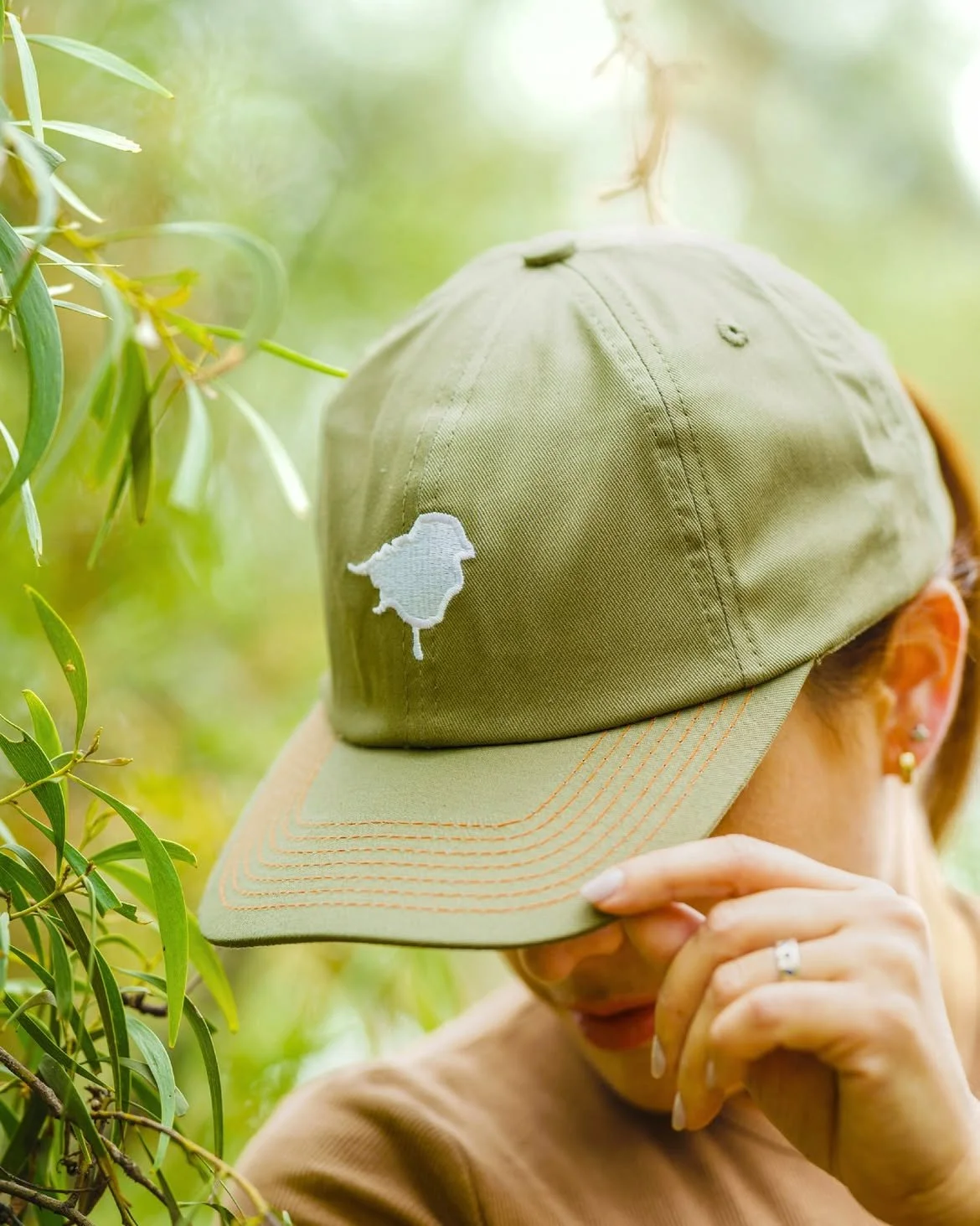
One of the hats by Topiku. Photo by LYFER
Further reading
LYFER's full account of the collaboration, including the interview with Monty and the story of his bird choice, is on their Avian Journal. The production video filmed during the LYFER run is on our Instagram.
Works Cited
LYFER. "In the Making: Meet Topiku." Avian Journals, 25 June 2026. https://lyferbrand.com/blogs/avian-journals-birding-lifestyle-blog/in-the-making-meet-topiku
Monty Hasan, in conversation with LYFER, June 2026. Quoted via LYFER Avian Journal.
LYFER. Bird Awareness and Conservation. https://lyferbrand.com/pages/lyfer-bird-preservation