
Upcycling vs Recycling: What Each Term Means and How Both Appear in Our Hats
Upcycling and recycling are different processes. Recycling breaks a material down; upcycling reuses it as is. Both appear in a Topiku hat, in our 2022 LCA.
Upcycling and recycling appear on a lot of product pages, often used interchangeably. They describe different processes, and the distinction matters when you are evaluating what a materials claim actually says. Both reduce demand for virgin materials, and that matters: the Ellen MacArthur Foundation estimates the equivalent of one garbage truck of textiles is landfilled or burned every second, and that less than 1 percent of the material used to make clothing is recycled back into new clothing.
Recycling: breaking a material back down
Recycling takes a material and processes it back to a raw or near-raw form so it can be used in a new product. A plastic bottle gets shredded, melted, and reformed. The original object is gone. The material has been recovered and reintroduced into a production process. That reprocessing step has an energy cost, and the quality of the output depends on how clean and consistent the input stream was.
The recycled HDPE in our hat brims works this way. Waste pickers in Bandung collect plastic. It is processed back into a material that can be moulded into a brim. The original plastic objects no longer exist. The material does. The people who collect and sort the plastic are doing the work that makes the brim possible, which is why we describe the system as one we buy into rather than one we built.

Recycling Process at Cigondewah
Upcycling: using a material as it already is
Upcycling does not process a material back to its raw form. It finds a new use for it in its existing state. The material keeps its original properties because no significant reprocessing has taken place. What changes is where it goes.
Our upcycled cotton twill comes from curtain-maker leftovers and deadstock in West Java. The fabric was produced for curtains. Some did not make it into the finished product. We use it for hats. The fabric goes directly from one production run into our supply chain with no reprocessing step in between. It is still the same twill it was when it left the curtain factory. It is simply being used instead of discarded.
The energy and quality difference
Because upcycling skips the reprocessing step, it generally carries a lower energy cost than recycling the same material. There is no shredding, melting, or remoulding, and no loss of quality from breaking a material down and building it back up. Recycling, by contrast, usually involves some degradation: recovered fibre is often shorter and weaker than virgin fibre, which is part of why less than 1 percent of the material used to make clothing is recycled back into clothing. Recycling is essential where a material cannot be reused in its current form. Upcycling is the better option where it can. Neither is better than the other in every context.
Both processes, one hat
A Topiku hat contains an example of each, which is part of why the distinction is not academic for us. The crown is upcycled cotton twill: curtain-maker deadstock from West Java, used as it arrived, with no reprocessing. The brim is recycled HDPE: plastic collected by waste pickers in Bandung, broken down and moulded into a new form. Same product, two different material routes, and two different claims. Both are documented separately in our 2022 life cycle assessment, because treating them as the same thing would overstate one and understate the other.
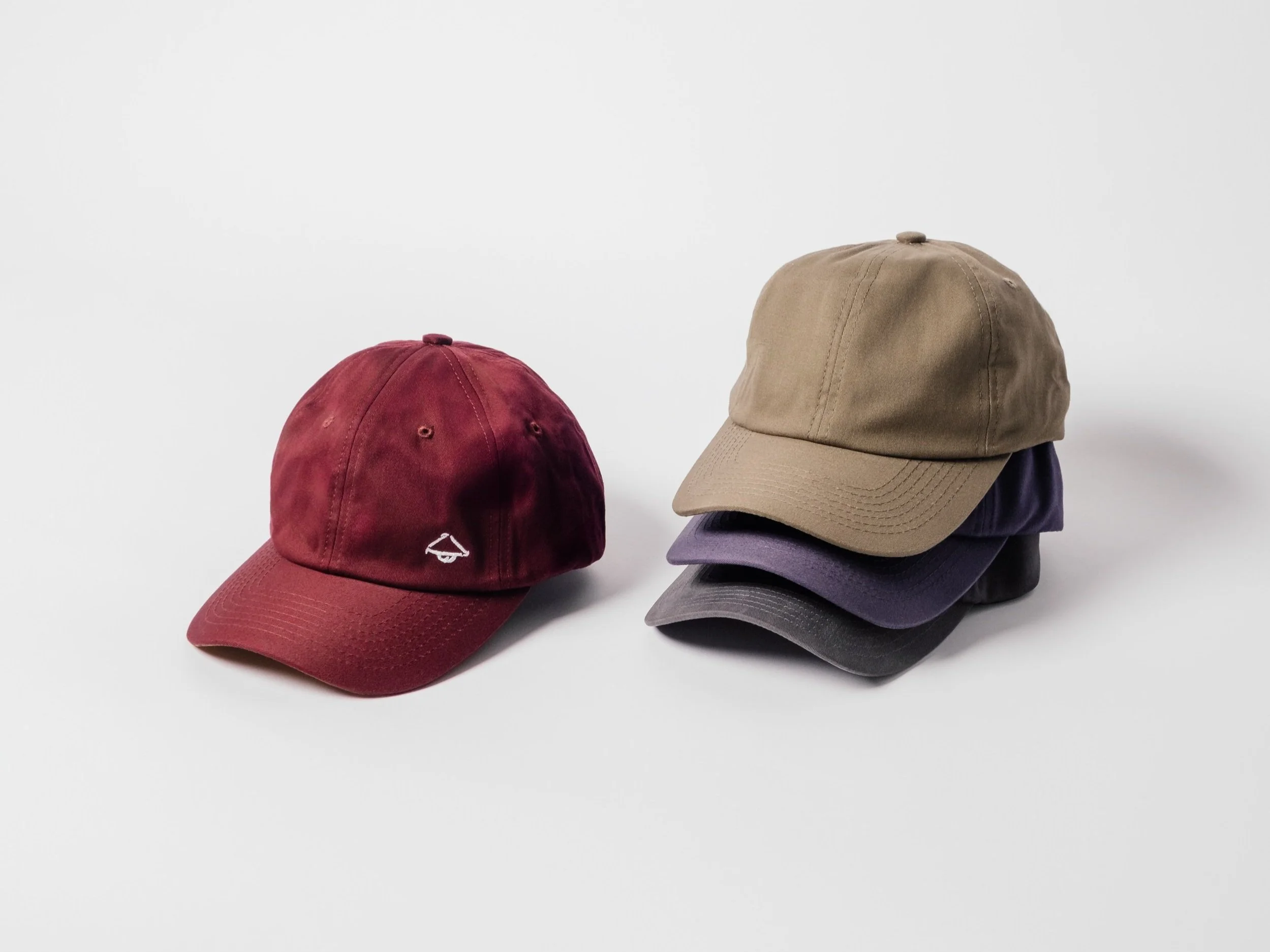
Our hats with upcycled cotton twill: curtain-maker deadstock from West Java
What this means for a buyer
When you are evaluating a materials claim, the useful question is which process actually happened. If a material was reprocessed back to a raw form and remade, that is recycling. If it was redirected to a new use in its existing form, that is upcycling. A supplier who uses both terms for the same material is either imprecise or uninformed, and either way it is worth asking which one they mean and whether they can point to documentation. Accuracy, not the more impressive-sounding word, is the standard.
Last week's post covers where the upcycled cotton twill specifically comes from and the wider textile waste context in Indonesia. Both are on the blog.
Works Cited
1. Ellen MacArthur Foundation. A New Textiles Economy: Redesigning Fashion's Future, 2017. https://www.ellenmacarthurfoundation.org/
2. Ellen MacArthur Foundation. Completing the Picture: How the Circular Economy Tackles Climate Change, 2019. https://www.ellenmacarthurfoundation.org/
3. Topiku. Life Cycle Assessment, 2022.