A Different District: What Leftover Hat Materials Became in Cigondewah
Desa Rahayu & Cigondewah, Bandung, are not a single workshop. They are villages and districts organised by craft specialty. The street where the hat makers work is different from the street where the bag makers work. The leather workers occupy a different stretch again. Each district runs on its own knowledge base, its own suppliers, and its own artisan relationships.
We have worked in the hat district since 2015, through our supplier Esduabelas. For years, the bag district was simply the next street over. Close enough to know about. Far enough that we had no reason to cross into it.
What changed was the material.
What does not work for hats
Not every material that arrives at Esduabelas ends up in a hat. Some fabrics do not have the right weight. Some do not hold the structure that a hat requires. Some have a texture or finish that looks good flat but behaves unpredictably once it is shaped into a six-panel crown or stretched across a brim. The artisan team at Esduabelas can tell quickly. The material gets set aside.
Set aside is not the same as wasted. But for a while, it was close.
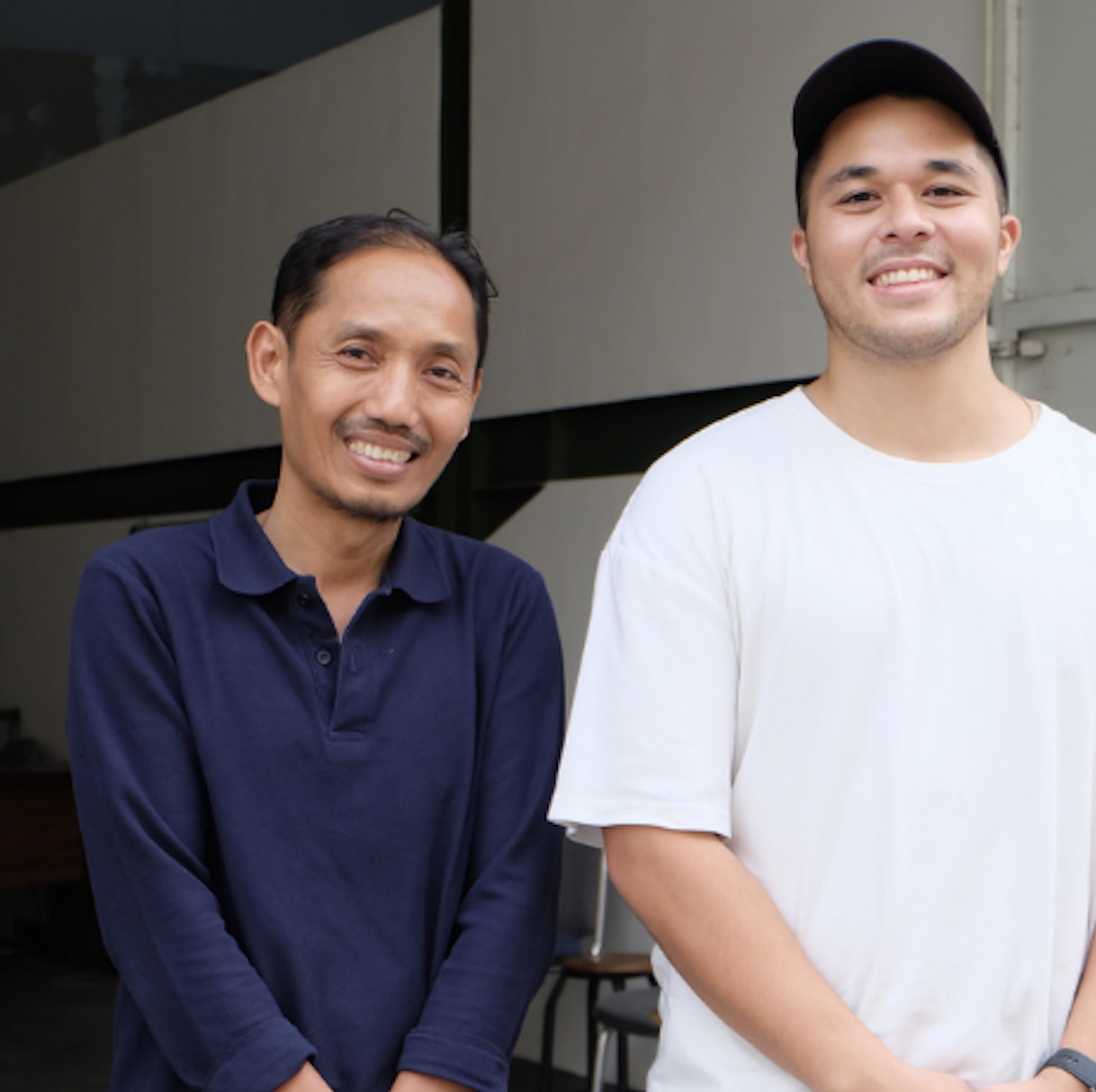
Pak Roni with Monty (Topiku’s Founder)
Crossing the street
Rian, who leads Esduabelas, knew who to introduce us to. The bag district does with fabric what the hat district cannot: flat construction, structured totes, pieces that show off material rather than conceal its variability inside a seam. He made the introduction.
Monty visited in June 2026. He met the owner of the bag production workshop, Pak Roni, who has run the operation in Cigondewah for years, and explained what Topiku was trying to do: find a use for the leftover material, work with artisans who already knew how to handle it, and see what was possible.
The conversation was direct. The material problem made immediate sense to Pak Roni. Bag production in Cigondewah runs on exactly this kind of input: fabric with character, with variability, with a history before it arrives at the workshop.
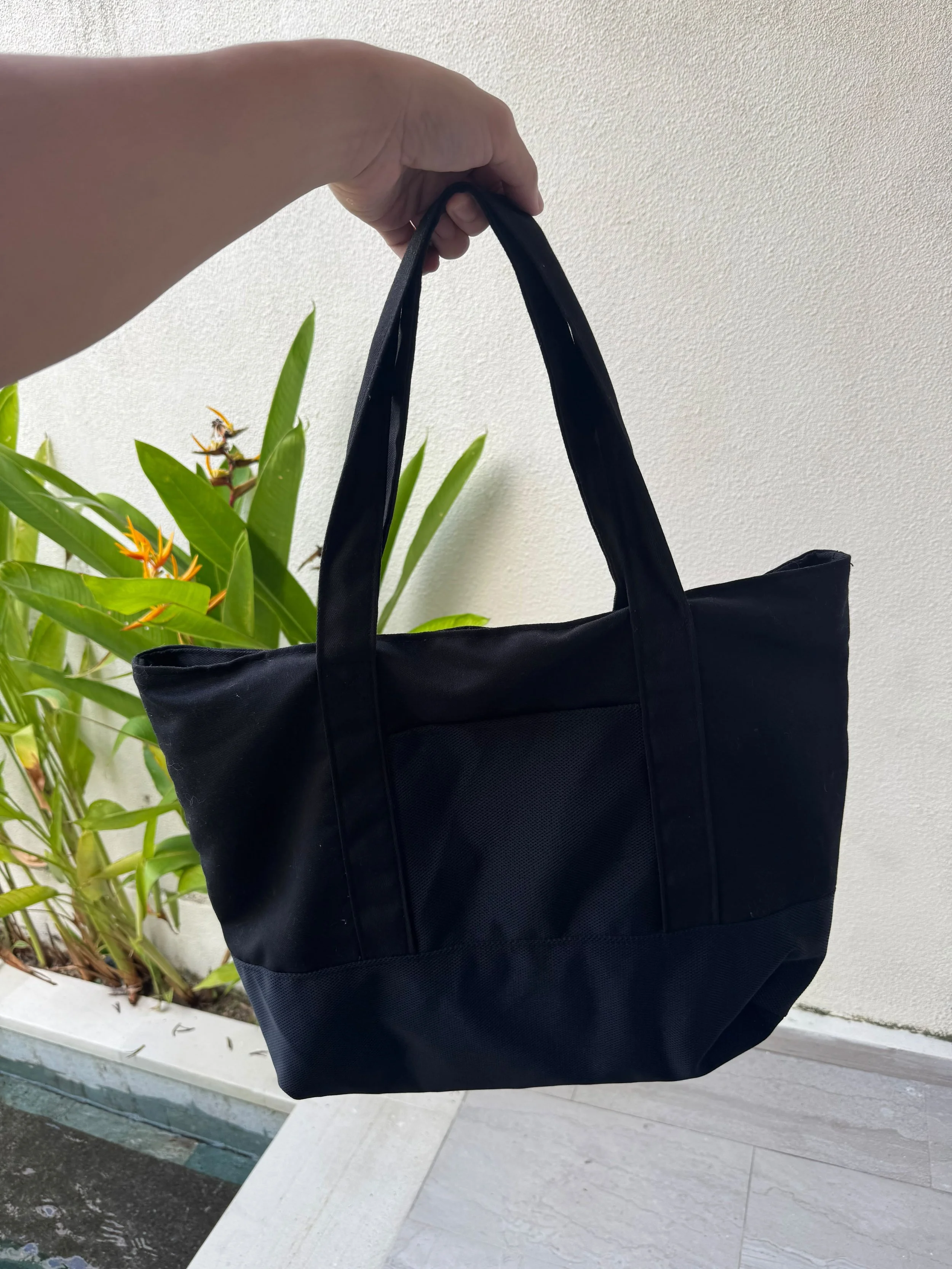
Totebag sample from Pak Roni
The sample
One totebag came out of that first visit. A single sample made from material that had not made it into a hat.
What we have is a sample, and an exploration of a new artisan relationship in a sector of Cigondewah we had never visited before, and a clearer sense of what is possible with material that currently has nowhere to go.
What the sample showed us: the construction works. The material holds up differently than it does in a hat. It shows more, which in a bag is an advantage rather than a problem. The variability that made it unsuitable for a structured crown is visible in the bag, and it reads as deliberate.
That is where we are. One sample, one new relationship, and a street in Cigondewah we did not know a year ago.
Works Cited
Visit to Cigondewah bag district, Desa Rahayu. August 2026. Meeting with Pak Roni, workshop owner.
Interview with Rian, leader, Esduabelas workshop, Desa Rahayu. August 2026.