
Most year-end posts list what went well. This one lists what we said we would do, checks each item against what we can actually show for 2026.
A claim is easier to trust when it is dated, specific, and limited to the evidence behind it. Procurement and ESG readers already know how to discount a highlight reel. They are the readers this post is for.
What we treat as a commitment
Not every sentence in a blog post is a commitment. For this record, we are checking the things we have written into how we operate: a formal giving policy, the production terms we apply to our supplier, and the measurement we use when we talk about the footprint of a hat. Where we only have a public action (a donation, a credit purchase, a production run), we report the action, not a new percentage we have not published.
We said, we did: giving in 2026
Through the Changemakers Program, we formally commit to donating at least 2% of annual revenue to organisations doing environmental and social work we believe in. We have met that policy every year since 2022.
We publish each year’s impact figures the following year, so our 2026 giving percentage will be published in 2027.
What we can date in 2026 is a set of actions, not a total. In May we donated $1,000 USD to Sungai Watch for its Run for Rivers campaign, a 1,200-kilometre run from Bali to Jakarta, over 58 days, to fund the removal of plastic from Indonesia's rivers before it reaches the ocean. We purchased 58 tons of Verra-certified carbon credits through SeaTrees' Climate Label bundle, sourced from the Southern Cardamom REDD+ Project in Cambodia, with each ton paired with one mangrove tree planted in Marereni, Kenya: 58 trees, each tracked over a 10-year period, with credits retired on our behalf through the Verra Registry. Through the Changemakers Program we also supplied hats for the field volunteers of Adventure Scientists, the Bozeman, Montana non-profit founded by Gregg Treinish in 2011.
A credit purchase is separate from reducing our own emissions, and we report it separately. We do not use the SeaTrees purchase to make a claim about the footprint of an individual hat.
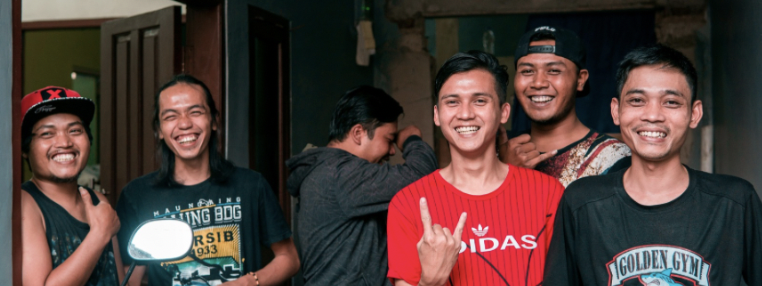
Our Artisans in Cigondewah
We said, we did: production terms we can show
We pay our supplier in Desa Rahayu, Esduabelas, above the regional standard, and we settle every invoice before the end of the month. We have worked with the same supplier since 2015. We do not employ the artisan team, and we do not claim to.
We also do not skip the sample stage, and we do not compress the stitching, the quality check, or sample approval to make a date. When we visited Esduabelas in July 2026, Tipa, who has been part of the artisan team since 2020, put that in her own words: "We like how it's comfortable here and people here are very supportive. We got fair pay and yet Topiku never pushed us to do the work quickly. They appreciate the timeline and time more, and know the importance of time for a good quality hat.
That is an account from one visit, not a 2026 audit. It is the most direct evidence we have from the production floor of how those terms feel in practice.
Measurement: What Still Rests on the 2022 LCA
In 2022 we published the first publicly available life cycle assessment for a baseball cap, prepared with an independent third-party consultant. Every per-hat footprint claim we make still rests on that 2022 assessment. We have not published an updated LCA since.
We have published more recent company-level figures, clearly dated. For 2025, we reported 5,047 kg of CO₂e emitted across materials, manufacturing, and logistics, and 57,608 kg offset, more than eleven times what we emitted that year, through SeaTrees projects in Cambodia and Kenya. We also logged 7,343 working hours by the artisan team in Desa Rahayu, Cigondewah. Since 2021, we have reported 53.1 tonnes of CO₂e emitted and 532 tonnes offset. Those numbers describe 2025 and the years behind it. They are not a 2026 inventory; our 2026 figures will be published in 2027.
Our impact page, topiku.co/impact, also states something that belongs in this record: most of our carbon footprint comes from distribution. In standard apparel manufacturing, typically 98 percent of greenhouse gas emissions occur before distribution. That is why sea freight is a planning decision, not only a logistics one.
In 2026 we also published a recertification milestone: our B Corp score rose from 98.9 to 157. We treat that as a checkpoint, not a trophy. B Corp assesses the company, not an individual product claim.
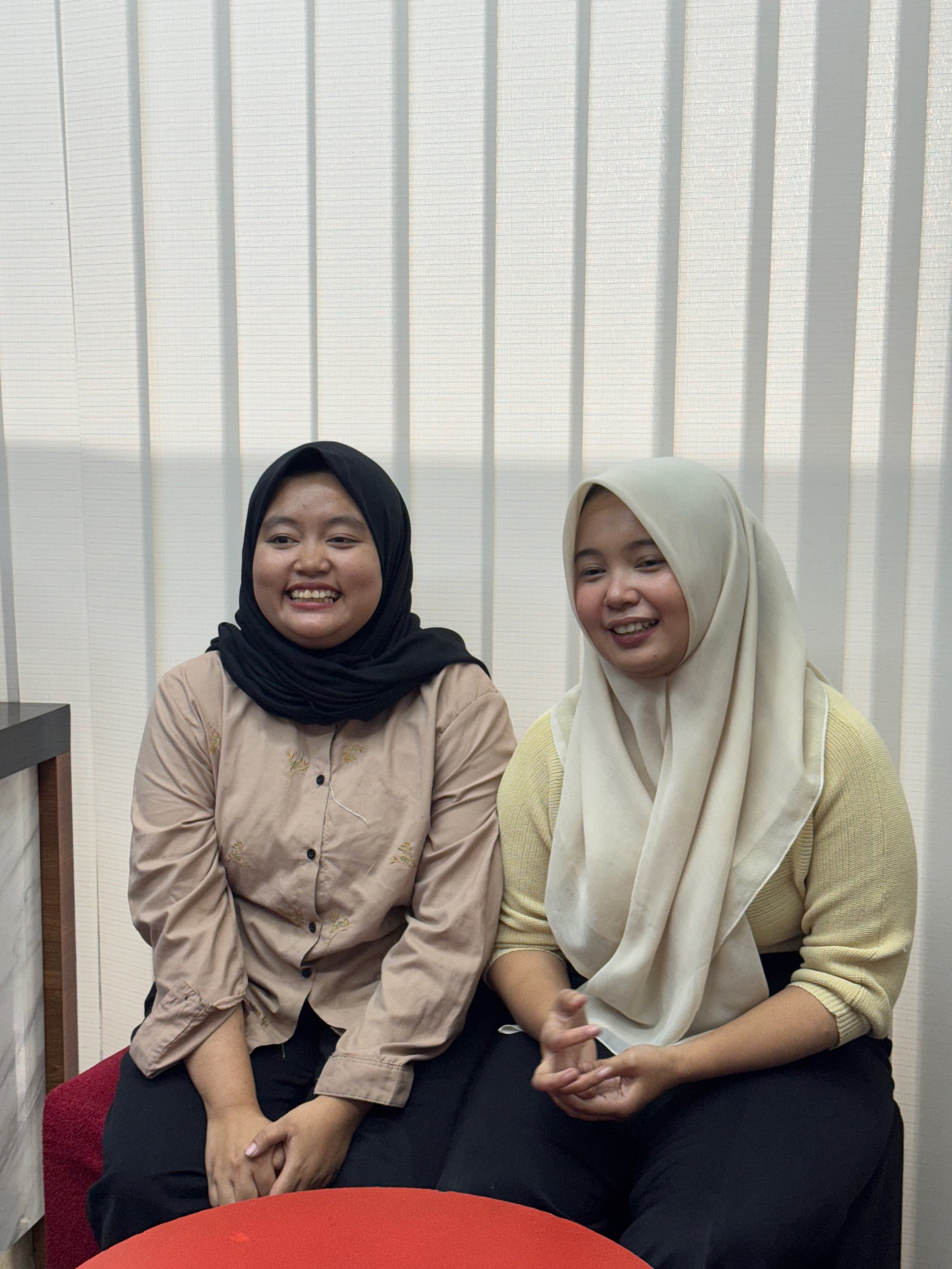
Our female artisans in Cigondewah
What stays in place
We are not attaching new pledges to this post. The formal giving policy remains a minimum of 2% of annual revenue, met every year since 2022. The production terms (payment above the regional standard, invoices settled before month-end, no skipped samples) remain the terms we work on with Esduabelas.
We would rather be checked than congratulated. If a figure is missing, the right response is to say so, not to invent one.
Works Cited
1. Topiku. The Changemakers Program: Turning Revenue Into Real-World Impact. https://www.topiku.co/blog/the-changemakers
2. Topiku. Running 1,200km for Indonesia's Rivers; Why We're Backing Sungai Watch's Run for Rivers. https://www.topiku.co/blog/running-1200-km-for-indonesia-rivers
3. Topiku. 58 Tons and Counting: Why Topiku Backs SeaTrees' Ocean Restoration Work. https://www.topiku.co/blog/why-topiku-backs-seatrees-ocean-restoration-work
4. Topiku. Why Topiku Supports Adventure Scientists Through the Changemakers Program. https://www.topiku.co/blog/why-topiku-supports-adventure-scientists
5. Topiku. Slow Fashion: Ethically Made Hats and The Women Who Make Them in Rahayu. https://www.topiku.co/blog/the-women-who-make-them-in-rahayu
6. Topiku. What Topiku's 2025 Numbers Actually Mean for the Planet. https://www.topiku.co/blog/what-topikus-2025-numbers-are
7. Topiku. Beyond the Score: How Topiku Raised Its B Corp Certification from 98.9 to 157. https://www.topiku.co/blog/beyond-the-score
8. Topiku. Beyond Hats: Topiku’s Social & Environmental Impact. https://www.topiku.co/impact